The Dead Cat Bounce
The Illusion of Sudden Order
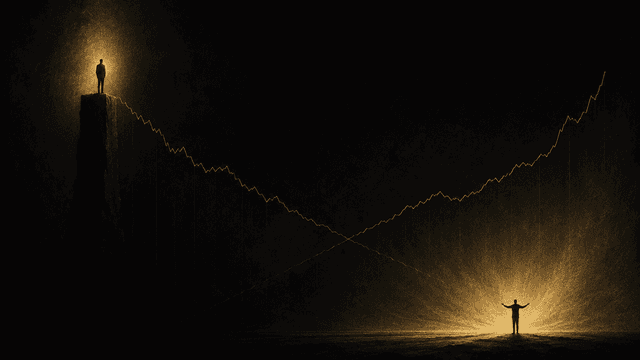
When I started this blog, the mandate I gave myself was simple: psychology, technology, philosophy. Politics, with its endless theatre and its cyclical despair, was to be left at the door. But the subconscious is a relentless editor. I am writing this in my notes app a little after 4 in the morning, having just woken from the second of two dreams I have not been able to put down. I am writing now, in the dark, because I know that if I wait for the sun they will have quietly rearranged themselves into something I can live with, and I will lose whatever they were trying to tell me. A dream you cannot put down is not a distraction from your subject. It is your subject. So, inevitably, I find myself writing about the state of our nation.
The Spectacle of Justice
Let me begin with the waking world, and let me begin fairly. Balaam Barugahara and Justine Nameere have gone after the corruption problem with a seriousness we have not seen in a long time. They arrive at district offices without warning. They read out the names of ghost workers to the press. They refuse to be intimidated, and they walk the accused past the cameras before a court has said a word. I do not think this is cynical. I think the two of them mean it, and are doing their best with the tools they have. The applause they are getting is earned, and I add mine to it.
My unease is not with them. It is with the fact that all of this rests on them. What we are watching is a campaign driven by the will of two people, and a person’s will has an expiry date. So the honest question is the one nobody celebrating wants to ask: what happens when Balaam and Nameere leave office? Do we quietly slide back into nonchalance and misappropriation until the next energetic minister arrives to shake us awake again? A fight against corruption that depends on who occupies a particular chair cannot outlive the person in it. What I want is not braver ministers. It is a structure in which their will has been converted into the system’s will, where doing the right thing no longer requires unusual courage, and where any well-meaning public servant, not only the two at the top, has both the mandate and the protection to contribute.
The laws are not the thing we are missing. They already exist, and they have existed for decades. They have simply sat in the dark, unused. Our tolerance for corruption was never an accident either; it was built in. The President himself once defended it, arguing that stolen money was tolerable so long as it was reinvested here at home rather than hidden abroad*. It is a pragmatic view, and it misses a hard fact. That ‘local investment’ concentrates money meant for hospitals and roads into a very few hands, and wealth concentrated that way produces the worst kind of inequality and feeds inflation, as a small new class spends irrationally and bends the market for everyone else.
* Speaking at Kololo on International Anti-Corruption Day, December 2021, President Museveni said Uganda was still lucky because those stealing government money were investing it at home in five-star hotels, and warned that tighter scrutiny might only push them to move it abroad.
Visions of Betrayal
My mind, trying to make sense of this arbitrary use of power, has handed me two dreams before I wake.
In the first, a young boy runs from shelter to shelter, begging to be let in. Everyone is too afraid, and he is pushed back into the open. The moment he steps out to look for another door, he is gunned down. His death does not settle anything. It brings the young out onto the streets. They come in protest, some carrying nothing more than water pipes, and charge the officers who fired. They are gunned down too. I remember one of them falling in a white jersey with blue strips, and then the noise cutting out into a flat and sudden silence.
I woke and fell back asleep into the second. An open military court. Three young men are paraded, accused of a crime no one bothers to name. A senior officer orders a junior to read the charges aloud in a language the men can understand, and the junior is too frightened to do it. He smirks, and the seniors snatch the paper from him to find someone else. While everyone waits, shots go off close by. It is a firing squad. One of the three is pinned against a tree trunk and nearly cut in half by the gunfire, and drops to his knees. It’s still in my eyes. The second is bearded, and it is his eyes I cannot get rid of. They were the eyes of a man asking why his country had betrayed him.
These nightmares did not come from nowhere and it’s not just me. Days before, a minister at the head of the campaign had said aloud, to cameras, that some of the men he was chasing deserved to be shot by firing squad**. My sleeping mind did not invent that image. It only took him at his word. I am no security expert, but I cannot make the daily tactics add up. Why are people with no criminal record bundled into unmarked vans, the kind we have taken to calling drones, and treated like terrorists? Is it strategy? A show of might? Or just institutionalized bad manners?
** In April 2026 the Uganda Law Society publicly condemned Local Government minister Balaam Barugahara for declaring a suspect a “criminal” before his first court appearance and suggesting that such suspects deserved death by firing squad.
The Mechanics of a Warped State
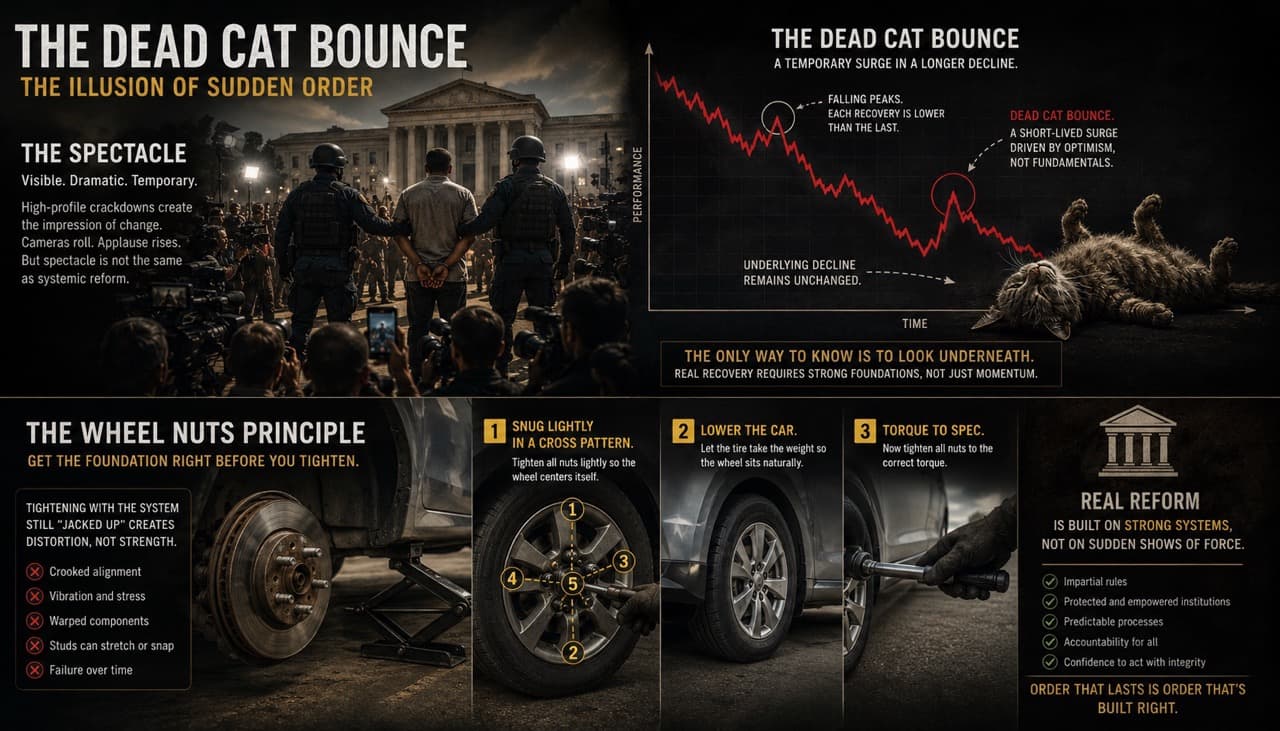
Uganda is quietly brewing a crisis of intellectual drain and institutional inertia. At first glance, the recent crackdowns might make it appear that we are exiting our uncivic era of outright theft. But to anyone observing closely, this feels like trading markets in a downtrend. Right when it feels like we have hit the bottom, there is a sudden, temporary surge.
Financial analysts have a name for that lift. They call it a dead cat bounce, a brief recovery inside a broader fall, driven by optimism rather than by anything solid underneath. These are falling peaks, because each recovery is convincing enough to believe in and lower than the one before. The only way to tell a floor from a bounce is to look at what is underneath, and what is underneath us is not new law. It is the same old absence of it, now performed in front of a camera.
Every working system needs some flexibility, but more than that it needs a rulebook everyone accepts, one that protects the innocent and catches the guilty without asking whose son they are. I badly want to believe this new strictness is the cure. I preached exactly that to colleagues, out of anger at watching money wasted. But my dreams sent me back to a feeling I once had in Rwanda. Rwanda is beautiful, safe, and strict, led by a man I genuinely admire and often hold up as my example of pragmatic patriotism. And yet, on a visit there, I noticed that many of the people around me had gone quiet somewhere inside. We changed restaurants three times in one evening because the staff were either too anxious to take an order or seemed to have checked out completely. Not everyone. But enough that I felt it. Rwanda had its reasons, and I will not sit in judgment of a history I did not live through. Still, order bought that way is bought with something, and part of the price is the ordinary aliveness of the people who have to live inside it.
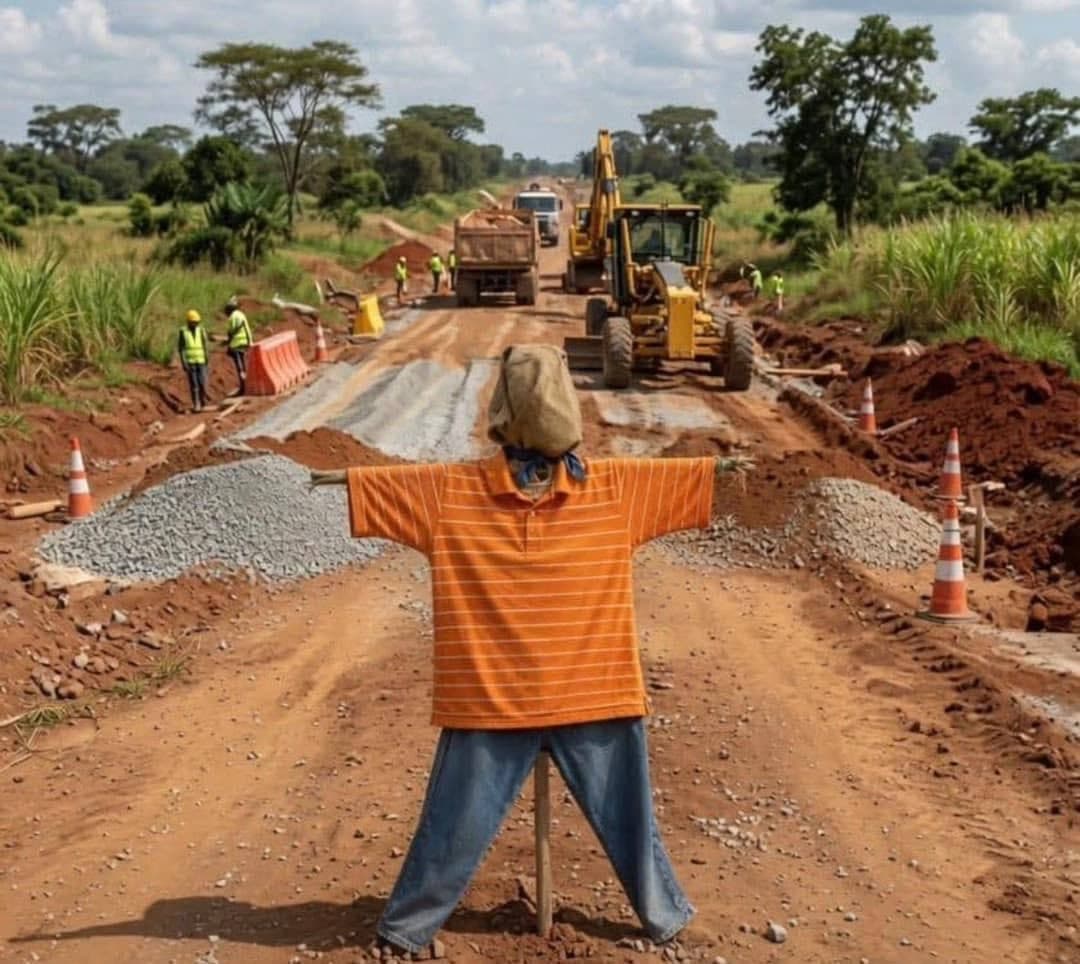
We are not even buying order. We are cranking down as hard and as fast as we can and calling it reform. Anyone who has changed a car wheel knows why that fails. You never take a single nut straight to full tightness while the car is still jacked up. The free-hanging wheel pulls to one side of the hub and sits crooked, so you drive away with shudder and shake, warped rotors, and studs stretched to the point of snapping. You snug all the nuts lightly first, in a cross pattern, so the wheel centres itself. Then you lower the car so the tyre takes the weight. Only then do you torque them down. We are torquing a wheel that is still hanging in the air, and the wheel is a whole country that has not yet been allowed to settle onto its own law.
The damage from that is quieter than any scandal, which is why almost no one names it. Fear does not turn a dishonest man honest. It turns a competent one cautious, and then it turns him still. Picture the engineer in a district office who wants to do his job well but has watched his colleagues paraded on cameras. He stops signing things. Not because he is corrupt, but because signing your name has become the shortest road to the tiktok news. Multiply that man across every ministry and you do not get a clean government. You get a frozen one. That is not reform. It is paralysis wearing the clothes of reform.
The Silent Exodus
For a while now I have joked with friends that I should buy some off-grid piece of land, escape the URA (story of another day 🤣), and leave the noise of Kampala behind for the sake of my sanity. I have made the joke often enough to hear what is actually inside it. This is not a joke about rest. It is the sound of a man withdrawing from his own economy while still standing in the middle of it.
Ask why China, an economy that is supposedly rising, still loses more millionaires to emigration than almost anywhere else. People with the means to leave read a country's direction of travel earlier than the statistics do, and when the reading turns bad they move, and they take their money and their talent with them. Uganda's real wealth is neither oil nor gold. It is the intelligence of its own people. So the question that should keep us up is a plain one. How many of our best will choose to build something here, and how many will leave the moment they hold a passport that lets them? A campaign that runs on fear rather than on law pushes more of them toward the door.
And it is not only Ugandans doing the arithmetic. Days before the dreams, the United States placed us on its highest travel warning, the same Level 4 bracket it keeps for Syria, Yemen, Sudan and Haiti, and told its citizens to stay away***. The reasons it gave were a mixed list, crime and disease and terrorism and unrest all at once, and I will not pretend they are all about our politics, since one of them is an outbreak nobody chose. But that is what gives the warning its edge. To someone weighing from a distance whether to come, the particular reason barely matters. A country in trouble reads, from the outside, as a single verdict: not worth the risk. The world is stepping back from us at the very moment our own capable people are, and both are answering the same question in the same way.
***On 15 July 2026 the U.S. State Department reaffirmed Uganda at Level 4, “Do Not Travel,” placing it in the same category as Sudan, South Sudan, the Democratic Republic of Congo, Haiti, Syria and Yemen, and listing crime, health, terrorism and unrest as its reasons.
I am not an expert in public management or governance, and I will not pretend to be. In this moment I am only an expert in how I feel, and what I feel is a strong pull to disappear. I have decided to treat that pull as information rather than weakness, because I doubt I am the only one who feels it. This is what a dead cat bounce feels like from the inside: an illusion of sudden order laid over a deeper decline. The answer is not to end what Balaam and Nameere have started. It is to outgrow it, to turn a crusade that currently lives in two people into a habit that lives in the system, so that the wheel is centred and any well-meaning person can help tighten it. That begins not with another arrest on camera, but with an honest and genuinely open conversation about whether the sun is coming up at all or going down.